Discuss the different leadership styles with their characteristics and the situations of their applicability.
Leadership Style
A leader's typical way of behaving towards group members is termed as leadership style. It refers to the behaviour exhibited by a leader during supervision of employees. The style represents the leader’s predominant way of acting with his group. Although, the style varies with leader, organizational researchers have listed the following three basis styles:
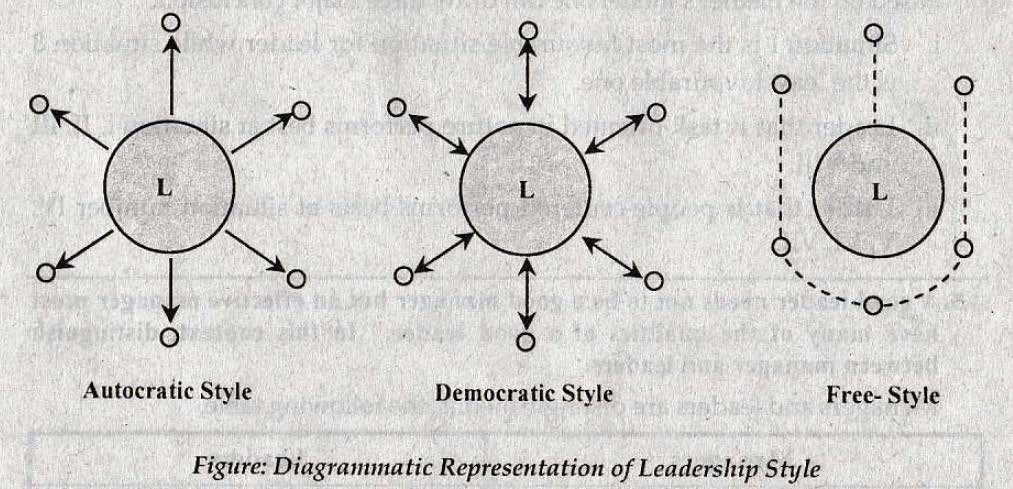
1. Autocratic style: the autocratic leader assumes full responsibility for deciding on group’s project by assigning tasks to members and permitting no participation in decision-making process. He centralizes authority and decision making himself and exercise complete and full- fledged control over his subordinates. He sets groups goals and structures the work. He gives orders and the subordinated are expected to obey them. Communication tends to be one way i.e. downward. The situation of autocratic style applicability are discussed below :
- When the subordinates are inexperienced.
- When the subordinates lack proper training.
- When the subordinates are unable to understand company goals.
2. Democratic style: democratic style is widely known as participative or employee-oriented leadership styles. The essence of this style is the consultation, the leader consults the subordinates. Before arriving at decisions, participative leadership styles take into consideration the wishes and suggestions of the subordinates as well as the leader. All members of the group are seen as important contribution to the final decision. The communication is two ways i.e. upward as well as downward. The situation of democratic style applicability are discussed below:
- When the subordinates are motivated experienced and competent.
- When the leader loves to participate subordinates in decision making.
- When the objectives of the organization are totally transparent to the subordinates.
- When reward and involvement are means of motivation.
- Free rein style: free rein style of leadership is also known as laissez faire style. It goes a step further of democratic style and turn an entire problem or project over Subordinates. Subordinates are asked to set their own and develop plans for achieving them. Thus, in this type of leadership style, a manger avoids power and relinquishes leadership position. The leader is a silent spectator. In essence, this approach is characterized by the absence of any active leadership in the group. It is the total abdication of responsibility, the leader merely functions as a group member, providing only as much advice and direction as requested. There is very little control or influence over group members of the leader. The situation of free rein style applicability are discussed below:
- When the subordinates graciously accepts the organizational goals.
- When the leader is ready to delegate decision making fully.
- When the sub-ordinates are ready to assume responsibilities.